Why did you choose the University of South Carolina?
I started at the University of South Carolina, though not in the traditional way.
I entered through the Gamecock Gateway program, which is a partnership with Midlands
Technical College. I didn't gain full admission right away, but looking back, I'm
genuinely grateful for that experience. It gave me time to focus, adjust and grow
academically while still living on campus in Bates House (shoutout the best residence
on campus!) and taking classes through Midlands Tech.
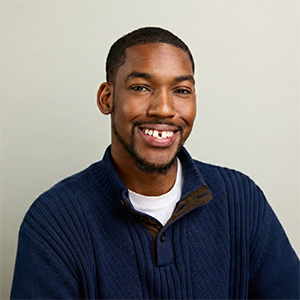
I chose USC largely because I'm from Columbia. I grew up a huge Gamecock fan, always going to football and basketball games throughout my childhood. Both of my uncles went to USC, and the university has always felt like a main part of the city. It was always just so cool to me, and I knew I wanted to go there. As I developed through high school, I learned more about USC's journalism program since I was been involved in the school newspaper in high school. It felt even more like a perfect fit.
Why did you choose information science as a minor?
I knew I wanted to study something in communications since I was already focused on
journalism. Information Science felt like a natural complement, but it also offered
a broader, more future-oriented perspective.
This was in 2016, a moment when information, media and technology were rapidly changing. Social media was reshaping how people consumed news, how narratives spread and how misinformation traveled. I became really interested in not just what was being communicated, but how, when and through what systems information moved.
Information science felt like an educated bet on the future. It allowed me to think more critically about information ecosystems, technology and communication at a structural level. I've always loved technology and consider myself something of a futurist, so the program's mix of communication, systems thinking and emerging tech really appealed to me. In hindsight, it paired perfectly with my journalism background and gave me a more complete way of understanding the world. I'd say I made the right call.
So what are you doing now?
I work in advertising as a communications strategist, sometimes called communications
strategy or connections strategy, depending on the agency. But the core idea is the
same.
I've worked at several agencies over the years: Goodby Silverstein & Partners in San Francisco (remotely), Wieden+Kennedy in Portland, and now TBWA\Chiat\Day in Los Angeles. In communications strategy, my role focuses on who brands are speaking to, when they show up, where they show up, and how those messages connect with other components of the campaign and ultimately, real people. Our strategy counterpart, brand strategy, often defines what a brand stands for and what it wants to say. Communications strategy is about how that message lives in the real world and how it actually connects with culture. I spend a lot of time thinking about culture, media, timing and context. It's very aligned with what I studied, and it allows me to use both analytical thinking and creative intuition to solve problems.
What do you most like about your job?
What I love most is sitting at the intersection of business and culture. On one side,
clients have real business goals they need to achieve. On the other, people respond
to authenticity, storytelling and cultural relevance. My role requires understanding
both worlds deeply. I naturally love culture: film, television, books, journalism,
art, podcasts and big philosophical questions about what's moving people at any given
moment. I also genuinely love understanding business problems and how brands operate.
Advertising allows me to bring those interests together.
What skills did you learn in the BSIS program that you currently apply in your job?
The BSIS program gave me an incredible foundation that I still rely on daily. First
and foremost, research skills! Learning how to search effectively, evaluate sources
and identify credible information has been invaluable. Even now, with AI making research
faster and more scalable, those fundamentals are what allow me to use new tools intelligently
rather than blindly. I also gained a strong understanding of information literacy;
how information spreads, how it can be distorted and how technology shapes communication.
That perspective is essential in advertising (And life in general if you ask me!),
where misinformation, perception and narrative matter deeply.
One of the most impactful courses I took was an R coding class with Dr. Karami. It was one of the hardest classes I've ever taken and there were so many times where I legitimately was like... "wtf is this!?", but it completely changed how I think about systems and how things are actually built. Even though I'm still not a developer (vibecoders stand up!) understanding some of the logic behind technology has helped me collaborate better and think more structurally.
Overall, the program strengthened my curiosity. I love researching, reading and learning about technology. The BSIS program helped me see how information and technology evolve together. They truly are symbiotic in my opinion and that relationship is only becoming more important. I feel incredibly blessed to have studied it when I did. Shoutout to professors like Elise Lewis and many others who care so deeply about educating students in the right way.
Advice or strategy you'd like to share with current or prospective students?
I was never someone who could study well in my dorm room. Even now, I don't do my best thinking at home. During college, I'd go to Thomas Cooper Library (sixth floor all the way down in the basement) throw on some jazz, classical music, or movie scores and finally be able to lock in. That said, what worked for me might not work for you, and that's the point: find whatever gets you in the zone. Maybe it's movie scores at Thomas Cooper. Maybe it's a coffee shop in the Village. Maybe it's studying with a group of friends. The key is making it interesting for yourself, because you are studying interesting stuff.
I'll also say to use the amazing tools available to you. I use AI every single day. I'm a power user and a strong proponent of it, not as a replacement for thinking, but to enhance my thinking and go deeper. I'll create podcast-style audio summaries for myself, run deep research reports, or use it to explore ideas in ways that make learning more engaging. I think it's a huge benefit to come up in a time when this technology is exploding, but it also can be a detriment if you let it. Finding the balance of making yourself more efficient but also still learning and implementing systems and processes is super important. Overall with studying, find whatever ways make studying fun for you. Your process won't look like everyone else's, and that's exactly how it should be.
Favorite memory of your time at USC?
I'll give you two as bookends. One from freshman year, one from senior year.
Freshman year: South Carolina Men's basketball's insane run to the Final Four. Sindarius Thornwell, Justin McKie, PJ Dozier, Frank Martin, that whole squad. It was so unexpected, and it completely took over campus. I went to a ton of basketball games that year, and honestly, I'd recommend going to everything — volleyball, soccer, swimming meets, whatever. Just show up. That run felt like what being a college student was supposed to feel like. The energy, the collectivism, the excitement, it was unforgettable.
Senior year: Realizing I hadn't been taking full advantage of the college experience and deciding to change that. I became more social, made deeper connections, and really lived in the moment. I was working two jobs and had long days, but I kept telling myself, "You're a college student, this is what this is for." I leaned into it. I stepped outside my comfort zone. I was kind to myself but also pushed myself. And I reminded myself constantly that things were going to work out, and they did and still continue to. God is good!
If I could leave you with one thought, it would be this: however great or not so great it is in the moment, your time as an undergraduate is finite. Be present. Be intentional. And know that the good energy you put out there will come back to you in ways that you may least expect it.
Go Gamecocks!!!